
Artificial intelligence is changing how work gets done. Yet many professionals still interact with AI the same way they did two years ago. They type a prompt, receive a response, and move on. That model is reaching its limits. A new approach is taking shape, and it is called Agentic AI.
This AI agent refers to systems that do not simply respond to instructions but can plan tasks, take action, evaluate outcomes, and repeat the process with minimal human input. In simple terms, it behaves less like a tool and more like a real human worker.
Institutions such as McKinsey and MIT have already identified this shift as a major driver of future productivity. Stanford HAI has also emphasized the move from reactive systems toward autonomous decision support. Together, these signals suggest that this system of AI is not an experiment. It is a structural change in how digital labor works.
Understanding agentic AI now matters because a massive shift in several sectors across the globe is already underway.
Agentic AI and the End of the Chatbot Era
Chatbots mark an important step in human-AI interaction. They make AI accessible, conversational, and fast. However, chatbots rely on a simple loop. A human asks. The system answers. Work still depends on constant direction.
This model creates friction. Each task requires attention. Each follow-up demands another prompt. Over time, productivity gains flatten.
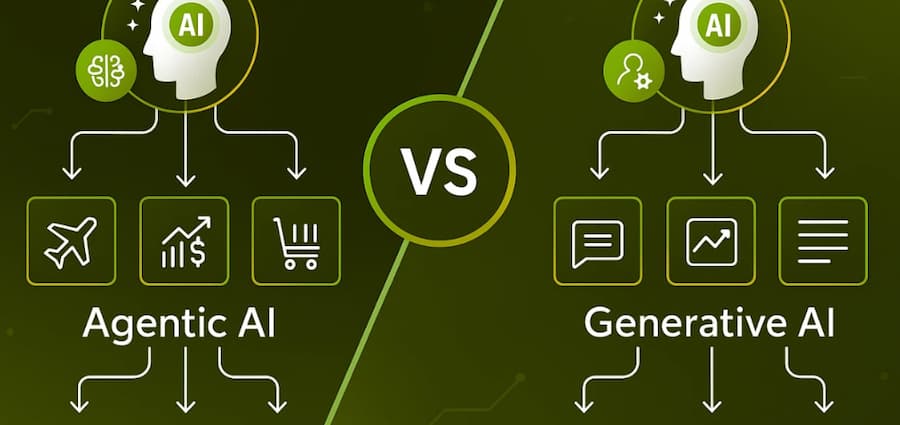
Agentic AI changes this dynamic. Instead of waiting for instructions, agentic AI systems can pursue goals independently. Once assigned a task, the system decides what steps to take, executes them, checks results, and adjusts as needed.
Due to this autonomy, productivity no longer grows in a straight line. It compounds. The human role shifts from operator to supervisor.
As a result, the chatbot era begins to feel limited. Agentic AI introduces a different ceiling.
What Agentic AI Actually Is
Agentic AI is best understood as goal-driven artificial intelligence.
Rather than producing single responses, this system operates in cycles. It receives an objective, breaks it into steps, acts on those steps, and evaluates progress. If the outcome falls short, the system tries again.
At the same time, the system has boundaries, as it does not replace judgment. It does not understand values on its own, and it also does not operate without constraints.
In practice, agentic AI works best when humans define goals, limits, and success criteria. The system handles execution within those rules.
This distinction matters, meaning that this AI agent is not general intelligence. It is structured autonomy.
As delegated workflows increase with autonomous AI, individuals must adapt how they preserve cognitive capital.
How Agentic AI Works in Practice
To understand agentic AI, it helps to look at three core components.
First, there are task loops. Agentic AI breaks large goals into smaller actions. Each action feeds the next step until the objective is complete.
Second, there is memory. These AI systems store context, decisions, and outcomes. Because of memory, the system improves consistency and avoids repeating mistakes.
Third, there is feedback. The AI system evaluates results against predefined standards. When outcomes miss the target, the system adjusts behavior.
Together, these elements allow this AI system to function continuously rather than episodically. The system works while the human steps away.
Hiring Your First Silicon Workforce
Adopting agentic AI requires a mindset shift. The question is no longer how to use AI. The question becomes how to manage it.
Hiring a Silicon workforce starts with role definition. Each AI agent system should have a clear responsibility. Vague instructions lead to weak outcomes.
Next comes scope. These AI agents perform best within boundaries. Clear limits prevent drift and reduce risk.
Finally, outcomes must be measurable. Humans remain accountable for results. Agentic AI executes tasks, but humans own decisions.
When approached this way, agentic AI feels less like software and more like delegated labor.
Agentic AI and Productivity in 2026
Traditional productivity tools offer incremental gains. Each improvement adds a small boost. Over time, returns diminish.
Agentic AI breaks this pattern. Delegation creates compounding effects. One system handles multiple cycles of work without constant input.
By 2026, productivity will depend less on speed and more on orchestration. Those who manage AI agents effectively will multiply output without multiplying effort.
McKinsey research already suggests that autonomous systems will account for a significant share of productivity growth in knowledge work. Agentic AI makes this possible at scale.
Risks, Trust, and Oversight in Agentic AI
Autonomy introduces risk. Errors can compound if left unchecked. For this reason, oversight remains essential.
Human-in-the-loop principles help maintain control. Humans review outputs, audit decisions, and adjust constraints.
Trust builds gradually. Early implementations should limit scope and complexity. Over time, confidence grows as performance stabilizes.
Agentic AI works best when autonomy increases slowly. Oversight protects both outcomes and reputation.
Who Should Not Use this AI Agent Yet
Despite benefits, agentic AI, however, is not for everyone.
For instance, organizations without clear processes may struggle. Individuals who expect perfect results may feel frustrated. High-risk environments may require tighter control.
Restraint builds credibility. This AI agent delivers the most value where workflows are defined and outcomes are measurable.
Not every workflow benefits from autonomy, especially when processes, accountability, or risk thresholds are still unclear.
Agentic AI as a New Literacy
Agentic AI represents a new form of digital literacy. Understanding how autonomous systems operate now matters more than adopting the latest tools early. The advantage comes from comprehension, not novelty.
This literacy begins with knowing how to define goals clearly. This AI agent performs best when objectives are explicit and outcomes are measurable. Vague intent leads to unpredictable results. Clear intent creates leverage.
Equally important is the ability to set constraints. Autonomy without boundaries introduces risk. Those who understand where to limit agentic AI gain control without losing speed.
Oversight completes the picture. Human judgment remains essential for evaluation, correction, and accountability. This system executes work, but humans remain responsible for direction and consequences.
The powerful shift from chatbots to agentic AI is therefore not about technology alone. It is about how work gets delegated, supervised, and trusted across systems.
Those who build this literacy early develop a durable advantage. They do not rush adoption. Instead, they learn how to think, manage, and decide in an environment where autonomous systems become part of everyday work.






3 Comments